

Hello Toggsers. North again.
Is it just me, or are approach shoes everywhere right now? Like, look:
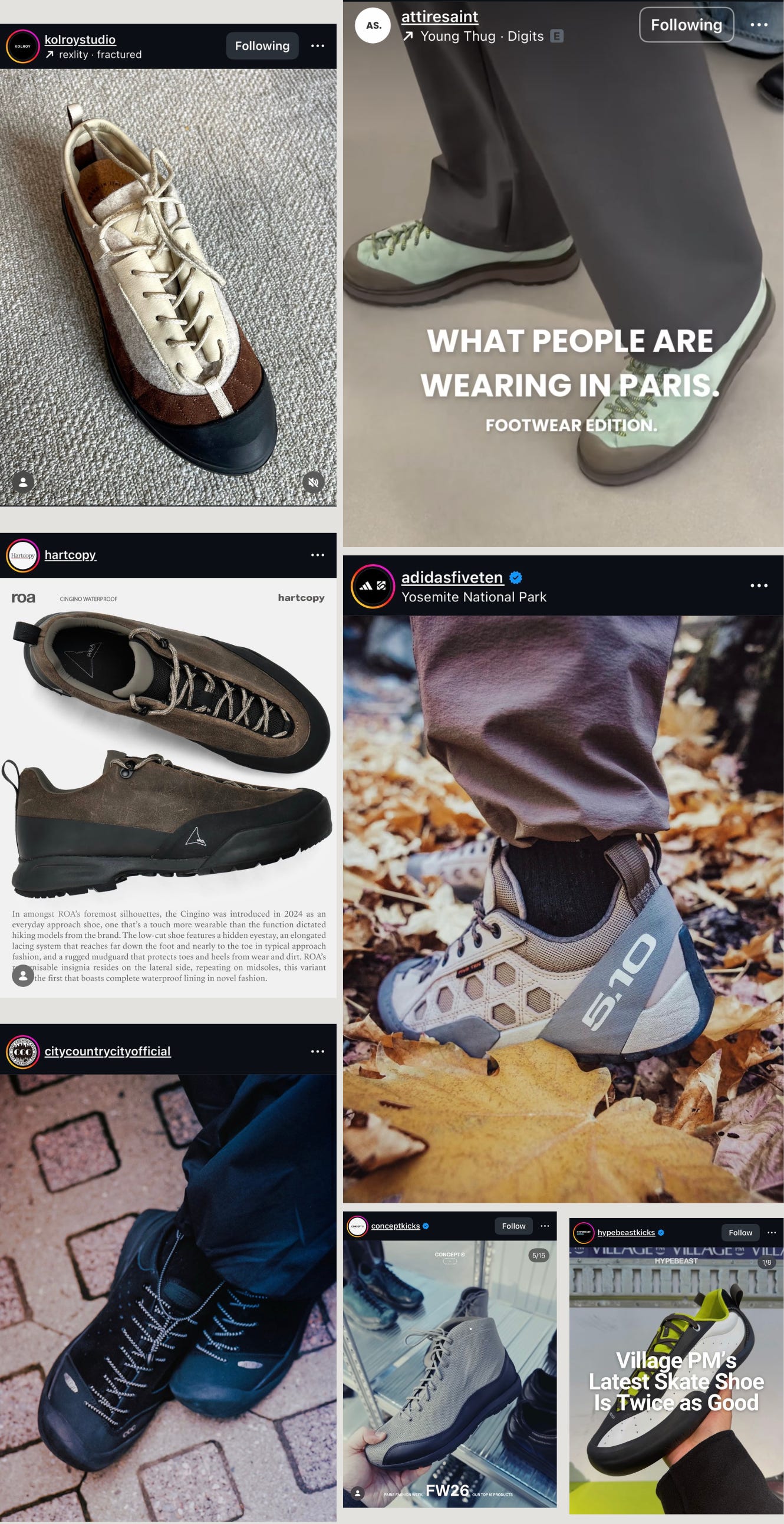
It’s a trend that’s been building for a while, but which seems to be cresting today. Just peep all the photos from Paris Fashion Week of Village PM’s—wait, we’re getting ahead of ourselves. We’ll get there!
Back in April, 2025, a writer at NBC published a shopping article titled “I can’t stop spotting these La Sportiva outdoor hiking sneakers everywhere.” About three weeks later, GQ ran a similar piece with the headline “The La Sportiva TX4 EVO ST Is the Cure to Salomon Fatigue.” Then, in November, a writer at The Strategist hopped on the bandwagon when he recommended the same shoes, opining, “If I had to put money on which outdoorsy shoe trend will supplant Salomon trail runners, I’d bet on approach shoes.”
The interest isn’t just coming from writers at lifestyle pubs looking for something new to recommend. People are asking the same question on the r/hiking forum on Reddit. Others are hyping the TX4 in r/gorpcore. Trend watchers on IG are dissecting the rise. Ever ahead, Blackbird Spyplane’s been tooting La Sportiva’s horn since way back in 2020. (Like I said, it’s been building for a while!)
“☯ Best ‘If Yr Tired of the Salomon XT-6’: La Sportiva TX3”
- 2020 Blackbird Spyplane GORP AWARDS
In a sea of sinking Salomon XT-6s, people are seeking a life raft, and approach shoes seem to be it. But the trend extends far beyond purpose-built models like the TX4. Footwear designed for all sorts of things are borrowing design queues from approach shoes, creating a wild storm of GORP-y lookalikes, a swirl of wrap-rubber, toe caps, and eyelets that lash laces from talus to toe.
What are we to make of all this? That’s the topic of today’s letter.
A basic anatomy
To begin, it helps to have a reference point. Because an “approach” in climbing can involve anything from a brief walk to a roadside crag to a full-on expedition, the category houses a lot of variation. For simplicity’s sake, we’ll look at the anatomy of the TX4, using my own clapped-out pair (which I got used from Second Wind Sports in Bozeman in 2020) as a model.
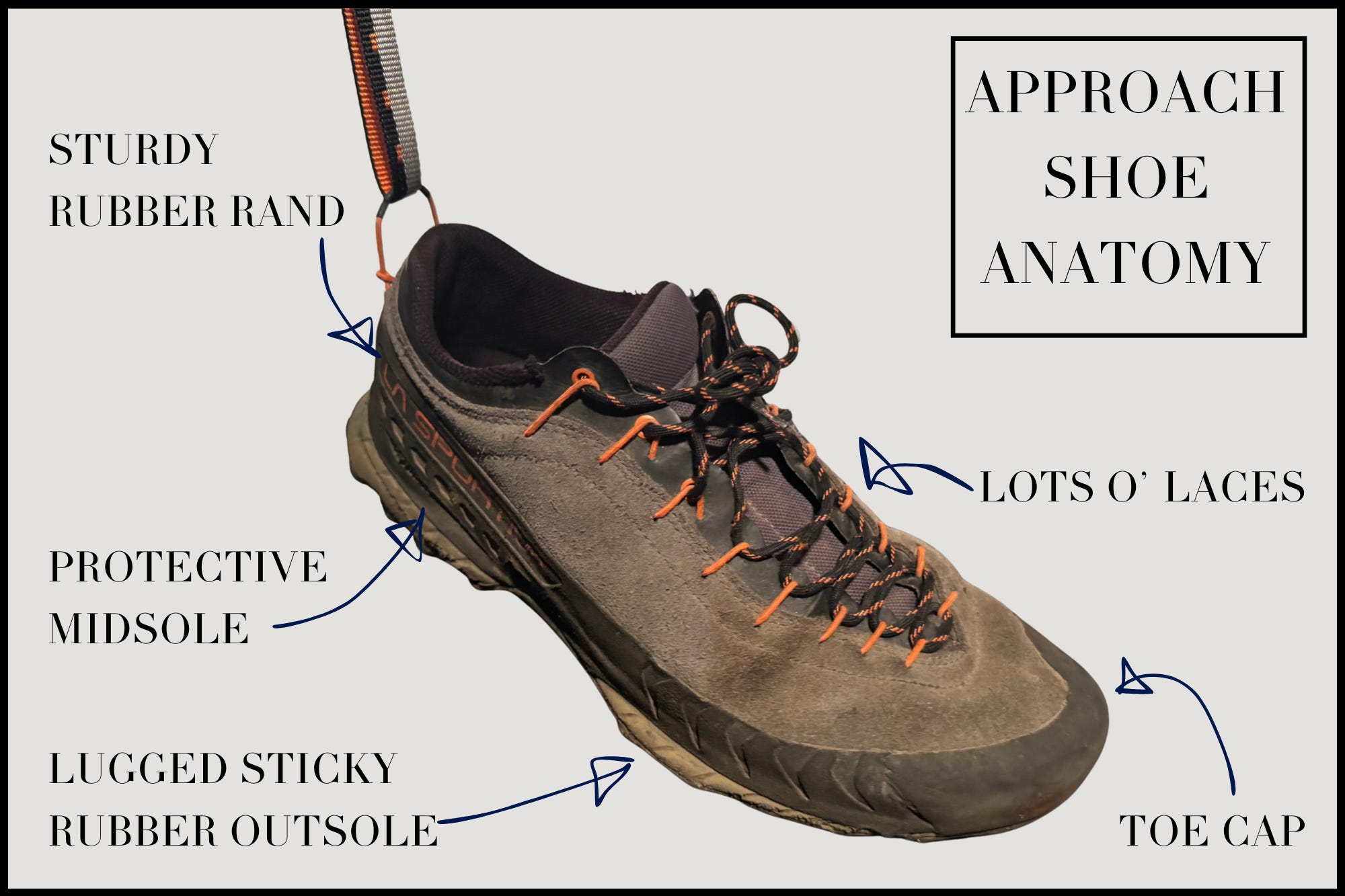
Ingredients include:
A sturdy rubber rand (which runs around the base of the shoe) for abrasion resistance and protection in sharp terrain.
A stiff (usually) cushioned midsole that protects your foot on uneven ground and supports edging.
A climbing rubber outsole, but with lugs for traction when not on rock.
A reinforced toe cap for durability and protection as you step, smear, jam, etc.
The Approach Shoe Proliferation
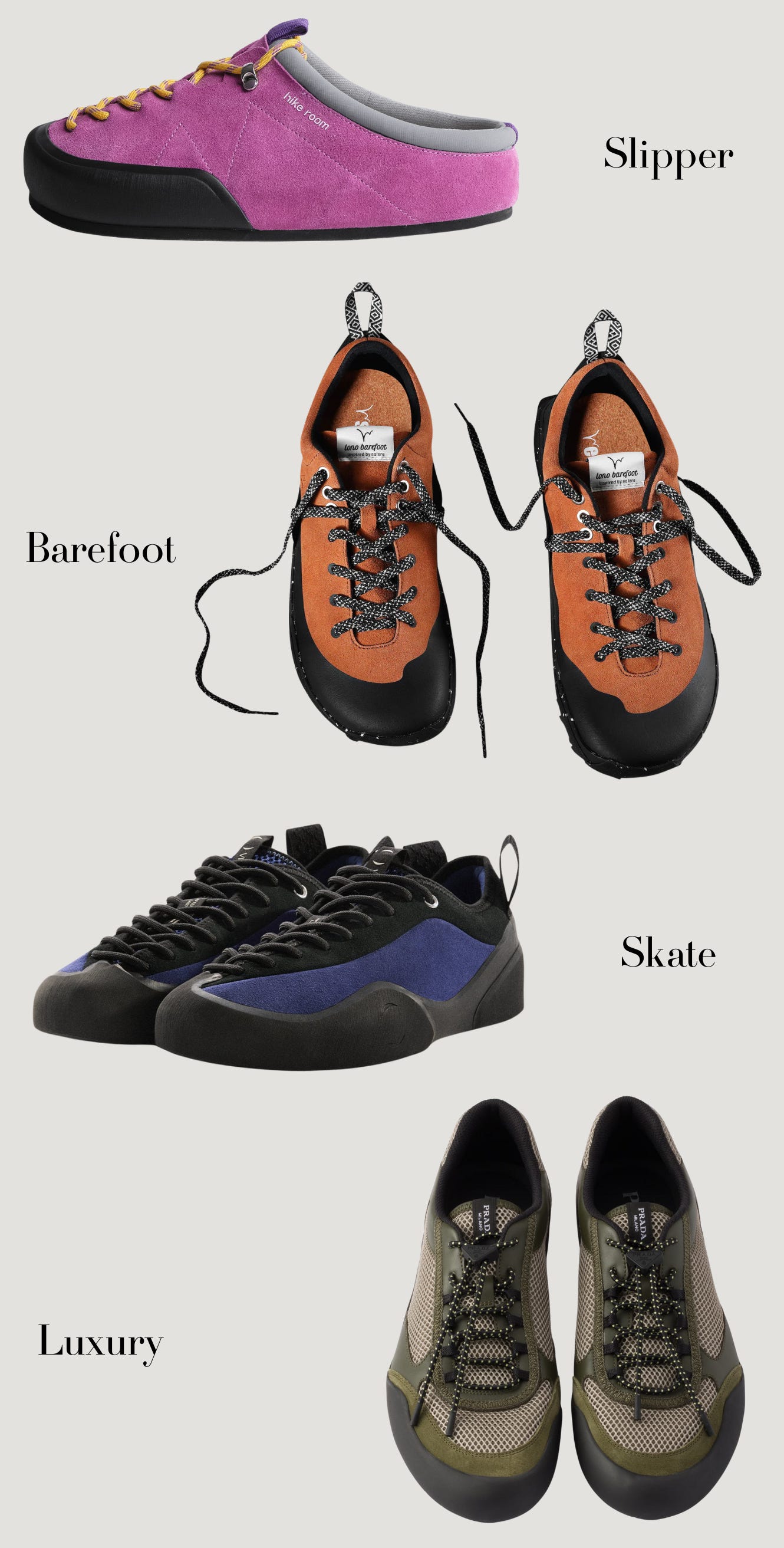
As you can see, the design of an approach shoe clearly derives from its specific function: those that look like the TX4 are made to hike and climb. But what we’re seeing now is a whole host of doppelgängers that borrow established forms while abandoning their earlier function.
Approach shoe slippers? Check.
Barefoot approach shoes? For sure.
Approach shoes for skateboarding? So hot right now. (Again, more later.)
Prada approach shoes? Yes, those exist. They came out in January, are called the Speedrock, and cost $1,120.
I’ll admit that my initial reaction to these shoes was not a generous one. The simile that first came to mind was that they’re like the fake rock facade of footwear: a wearable equivalent to a common abomination in architecture.
Architects tend to dislike details that are added to buildings for adornment only. Well-designed structures are beautiful because they honor the materials used to build them. Like a lot of the best outdoor gear, their form (and feel) comes from the materials used and their inherent qualities, at least in the broad strokes.
A famous articulation of this idea comes from the 20th-century architect Louis Kahn, who said:
“You say to brick, ‘What do you want, brick?’ Brick says to you, ‘I like an arch.’ If you say to brick, ‘arches are expensive and I can use a concrete lintel over an opening. What do you think of that, brick?’ Brick says: ‘I like an arch.’”
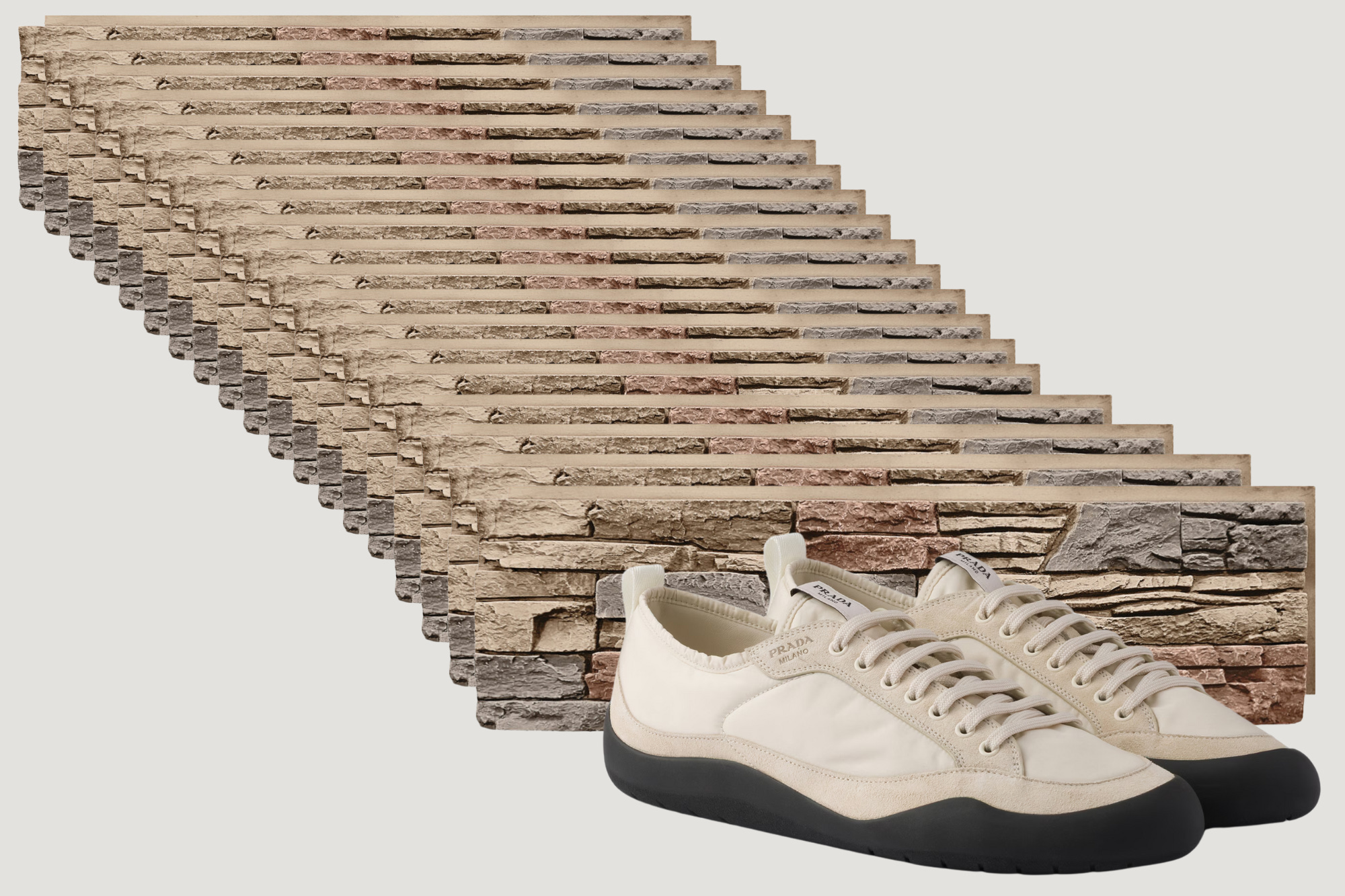
What do the materials that make up the Prada Speedrock say? Is the rubber actually sticky? Would granite mangle the wide-gauge mesh? It’s hard to know without trying them, but even in its marketing copy, Prada’s pretty explicit about what’s going on. (The bolded lettering is mine.)
“The aesthetics of climbing are reinterpreted with precision and lightness, transforming functionality and performance into a new code of everyday elegance…
“Elements such as the paracord, inspired by mountaineering ropes, become distinctive graphic signatures…
“Speedrock interprets the mountain imaginary with a refined gaze, transforming technical experience into an act of style.”
Aesthetics.
A new code.
Graphic signatures.
Not technical experience but an act of style.
Maybe that’s just what Prada does, but the whole thing feels a bit goofy since the design of the shoe makes so many deliberate references to functional footwear. Knock on the rock facade and all that’s behind it is air. Pull on it and it cracks. Give it a kick and it rings hollow.
The context that gives the shoe meaning has been vacated, and what’s left is pure artifice. It reminds me of something Kellyn wrote in her “Is Gorpcore Dead” letter:
“The cool factor of gorpcore relies so heavily on subculture groups and the values they’re associated with. The clothing’s original context gives it credibility, and wearing it signals values: toughness, capability, adventurousness, seeing function > aesthetic. (A bit of irony in trend-hindsight there.)
“…The differences between the $1,000 Arc’teryx jacket and $75 Zara jacket become invisible to the untrained eye and the cultural hierarchy that sustained the trend dissolves.
“But that can be a beautiful thing! New sparks, fresh simmers!”
Fresh Simmers!
So what’s simmering?
Perhaps it’s useful to be a little less reactionary and ask why people are pulling on approach shoes in the first place.
For one, the last decade has taken climbing into the mainstream, particularly in urban areas. Gym climbing made its Olympic debut at the Tokyo Games in 2020, and the number of indoor gyms in the United States has exploded in recent years. According to the Climbing Business Journal, 269 new climbing gyms opened in the U.S. between 2014 and 2023, marking a 76% increase in less than a decade.
If you live in a city and want to signal that you’re a climber, wearing a pair of TX4s is a heck of a lot more comfortable than tip-toeing around in your actual climbing shoes. And it helps that most approach shoes have a certain visual appeal, one that’s edgier than most hiking footwear and that I attribute primarily to contrast: blocky soles with curved/anatomical uppers; long tongues with stubby toe caps; thick laces with thin tension loops; smooth rubber that cuts a line along roughened suede. They’re a bit alien, or hoof-like. They look like they’re made to traverse someplace strange and far away.
On the functional side, approach shoes also work decently well for city living, or so the loudest voices of r/hiking say. More than one user has called them “the perfect urban shoe.” Others point to their grip, durability, comfortability, and “reasonable” good looks. A number of contrarians appreciate how wearing them in casual settings pisses off climbing’s worst gatekeepers ;)
So, a more generous way of understanding the explosion of approach shoe lookalikes is that brands are taking their functional elements and re- (and in some cases de-) tuning them for the places that people actually wear them.
The Keen Jasper Rocks sneaker is a good example of this. I picked up a pair about a year ago, less for their approach shoe associations than for the way they evoked a GORP-y bowling shoe, especially in my clown-foot size.
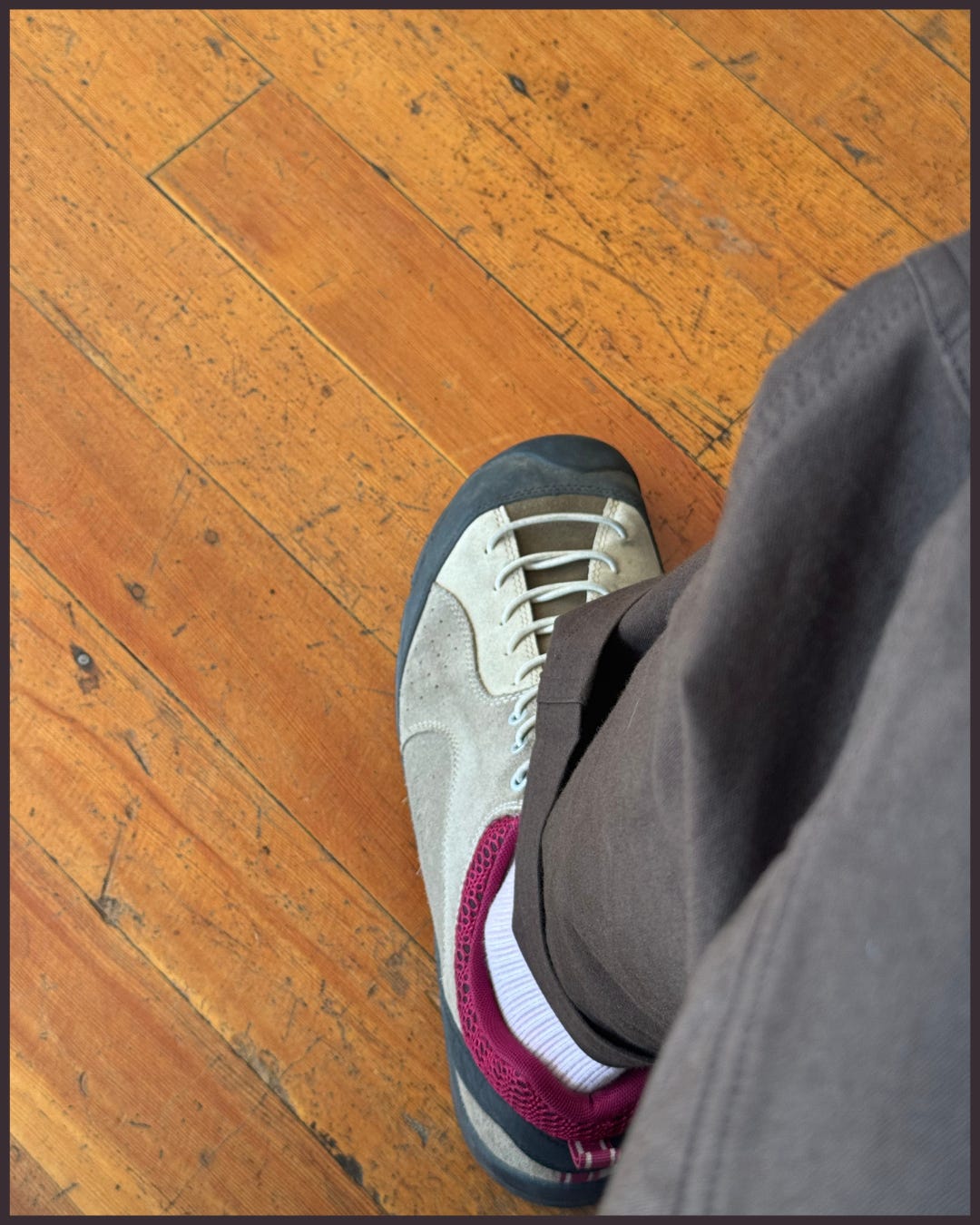
At first blush, the Jasper Rocks could easily be thrown into the same heap as the Speedock. They look like an approach shoe, but, in hand, are clearly not: the rubber isn’t particularly sticky, the toe cap is petit and the toe edge is edgeless, they lack a midsole, and they offer little in the way of structure or support.
Like Prada—but less annoying—Keen is straightforward with its intentions and calls the Jasper Rocks “climbing-inspired.” They’re not meant for actually ascending anything, but their design details do all carry some function. The mud guard on the toe, for example, protects the easy-to-dirty suede from whatever grime you walk through, and the bungee laces are quick to tighten. At $140, they’re about $50 less than a pair of TX4s, which could feel overbuilt for everyday use anyway.
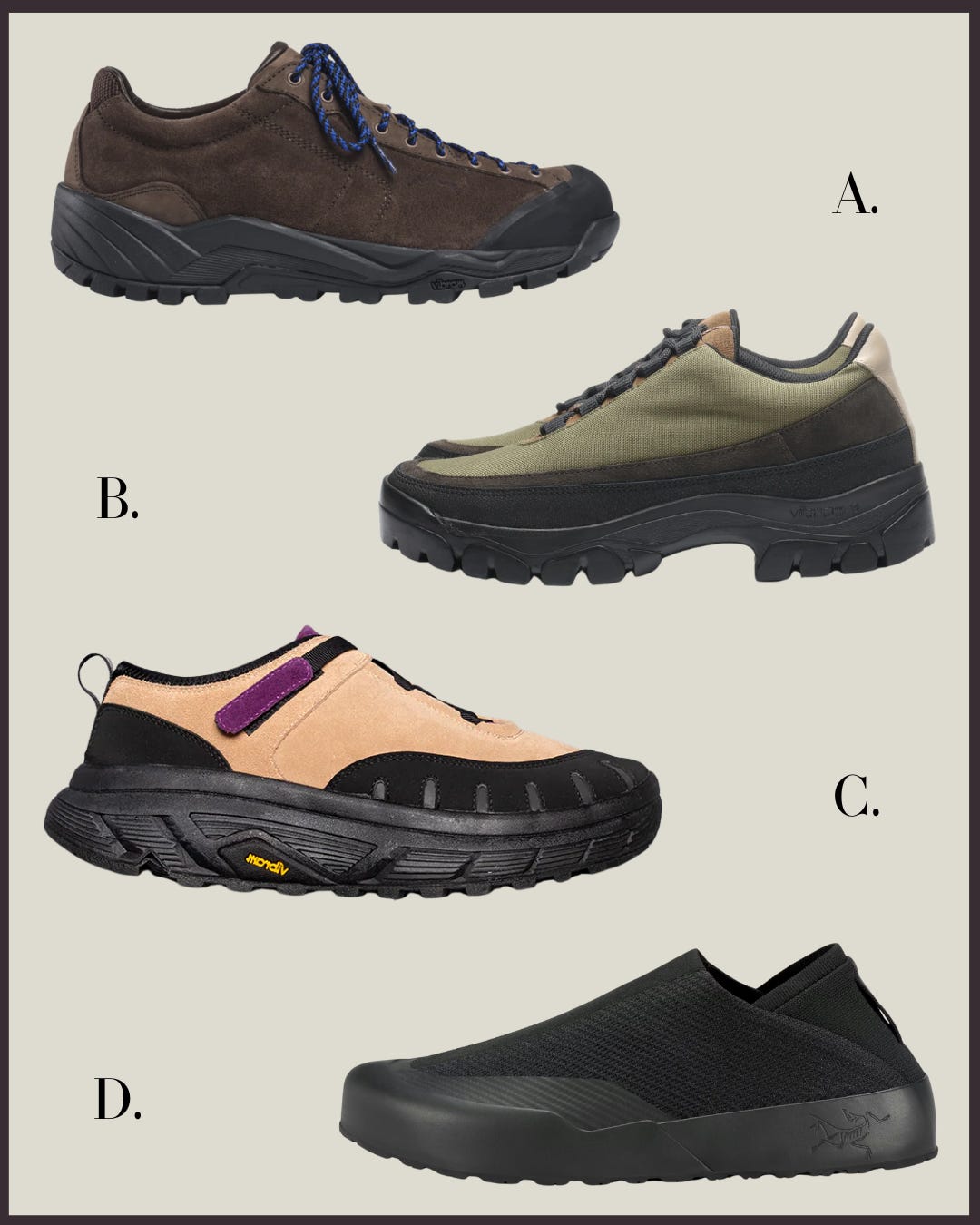
A bunch of brands are taking this approach, and I must say I do like some of the results:
More exciting is—at last! for those still with me—the lineup of climbing-inspired skate shoes being pumped out by Village PM, an upstart French brand that has been the subject of much hype lately, particularly in the wake of Paris Fashion Week.
Village PM made a splash in 2024 when it launched with the 1PM, which borrowed the sticky rubber rand and lace structure that defines approach/climbing shoes and brought them to skateboarding.
In some ways, it was a stroke of simple brilliance. Skateboarding is notoriously hard on shoes: the grip tape tears at the upper—often a reinforced suede—every time you ollie or otherwise pop a trick. If you skate a lot, shoes can last just a few weeks, and once they’re worn beyond a certain point, their performance suffers considerably. The rand on the 1PM protects the shoe from this fate while retaining (or possibly improving) the grip that makes tricks possible. According to Village PM, a cobbler can replace the rand once it wears out, which is a completely new idea in skateboarding.
Other materials from the outdoor industry are being embraced by skateboarding, or at least by skateboard brands. Vans, for example, made a version of its Authentic (usually in canvas or suede) with a Dyneema upper and a Vibram sole. In a sport that’s historically been allergic to intrusions, it’s striking to see incoming changes that could stick. Maybe this speaks to the rising cultural cachet of climbing, or even to skateboarding’s relative decline. (I grew up watching Bam Margera and Rob Dyrdek and Ryan Sheckler on MTV; now Alex Honnold is doing live events on Netflix.)
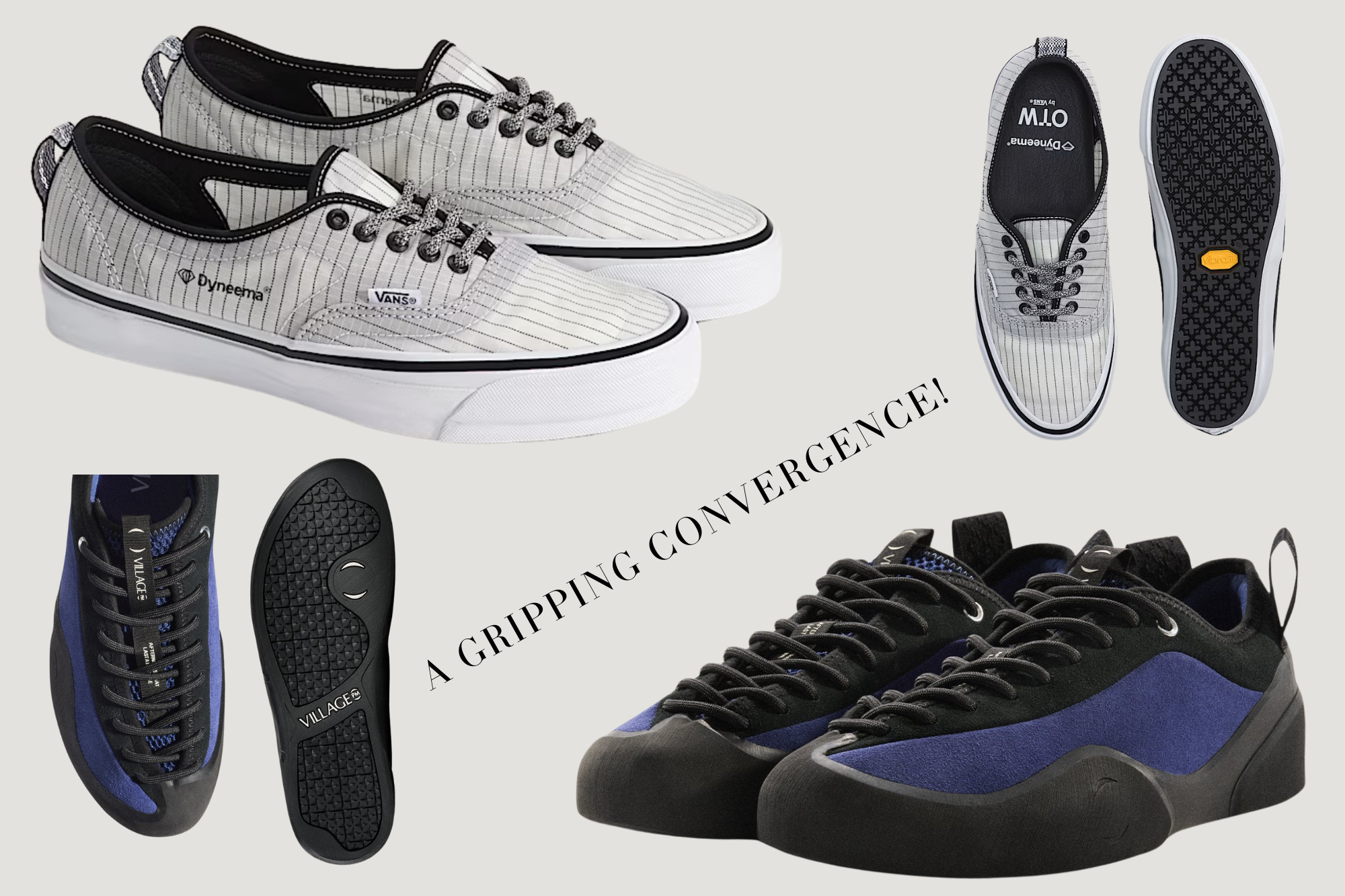
But in any case: here we have functional solutions borrowed from one sport and applied to another in a way that makes sense at the material level—pretty slick, like finding a new way to build with brick.
Stack it up 🧱🧱🧱,
North
Off the Grid
Fuzzy striped knits, wise man models, blues, greens, and clean textures too.

When my actual approach shoes bit the dust on a trip to Squamish I bought a pair of GTX Salewas and they’re essentially how my feet have survived this arctic winter. Their being on trend has been my biggest W apart from not eating it on talus on that trip.
Loved this read!!!