
Not-Your-Average Rain Jacket Roundup
Break out of your shell with men's, women's, and unisex slickers.

Hi, TOGS pals. North again.
It’s been a wet winter here in northwest Washington State. Back in December, an atmospheric river caused major flooding across Whatcom County. Rivers swelled well beyond their banks, roads calved off hillsides, and a number of residents who’d finally recovered from a similar surge back in 2021 saw a rush of water come for their homes again.
In light of all the genuine hardship that this year’s rains have caused, it feels a little superficial to write about waterproof jackets. But hey: we here in the PNW are creatures of the wet, and clothes are a necessary form of protection.
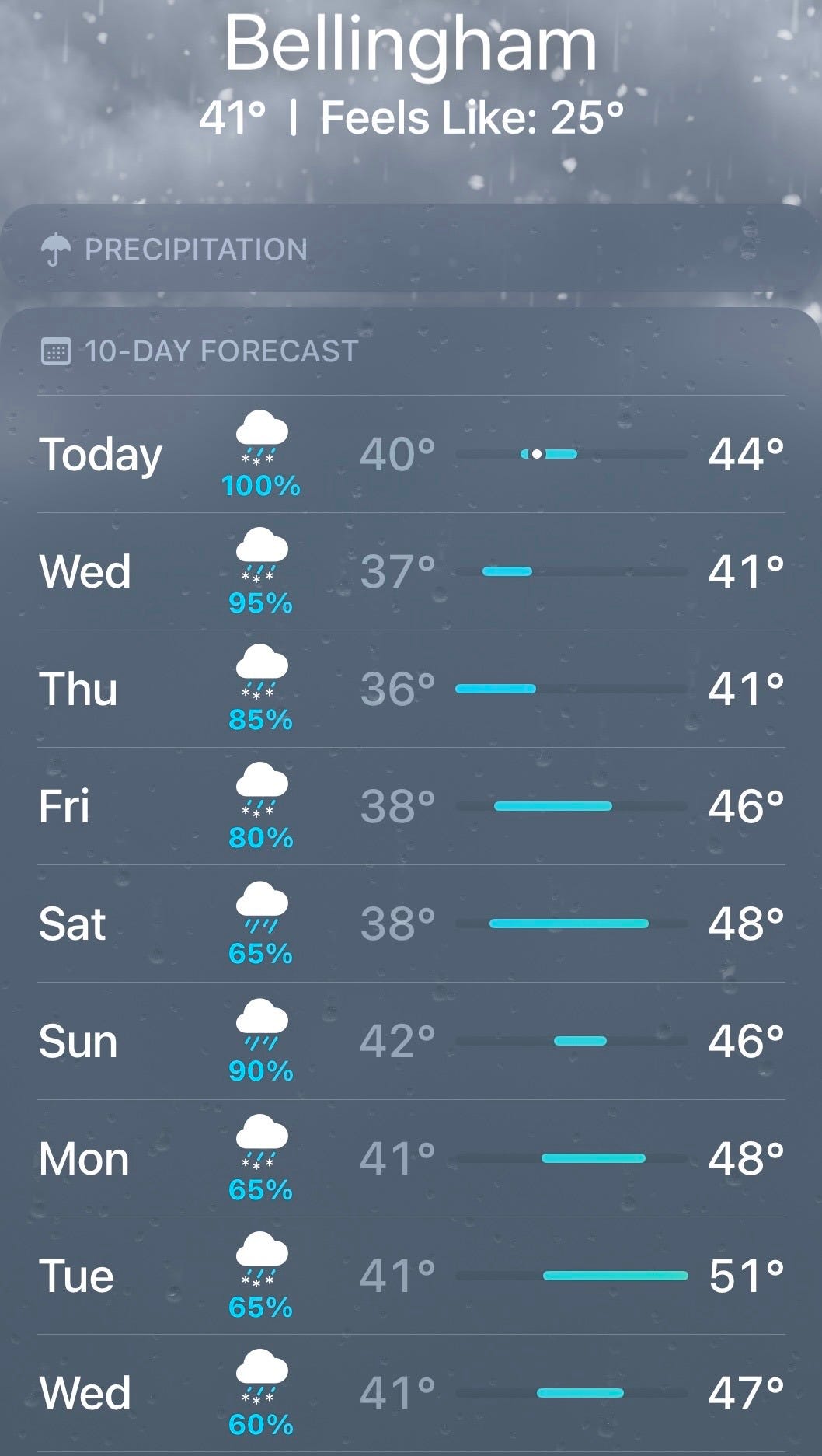
Besides, this is what a recent week of weather looked like:
There is a stereotype in western Washington that only people new to the region use umbrellas, whereas the real locals wear rain jackets. Even if the reasoning behind this rule is misguided, it does hit upon a truth: as a PNW lifer, I’ve never owned an umbrella and have always owned at least one rain jacket.
For the past six or seven years, I’ve defaulted to a yellow Black Diamond rain shell for everything from ski touring and alpine climbing to bike commuting and rainy city romping. Since I bought the jacket on closeout, I never felt too precious about it. If I needed to, I wore it, and through that basic equation it became one of those wardrobe staples that I carried (or wore) almost everywhere.
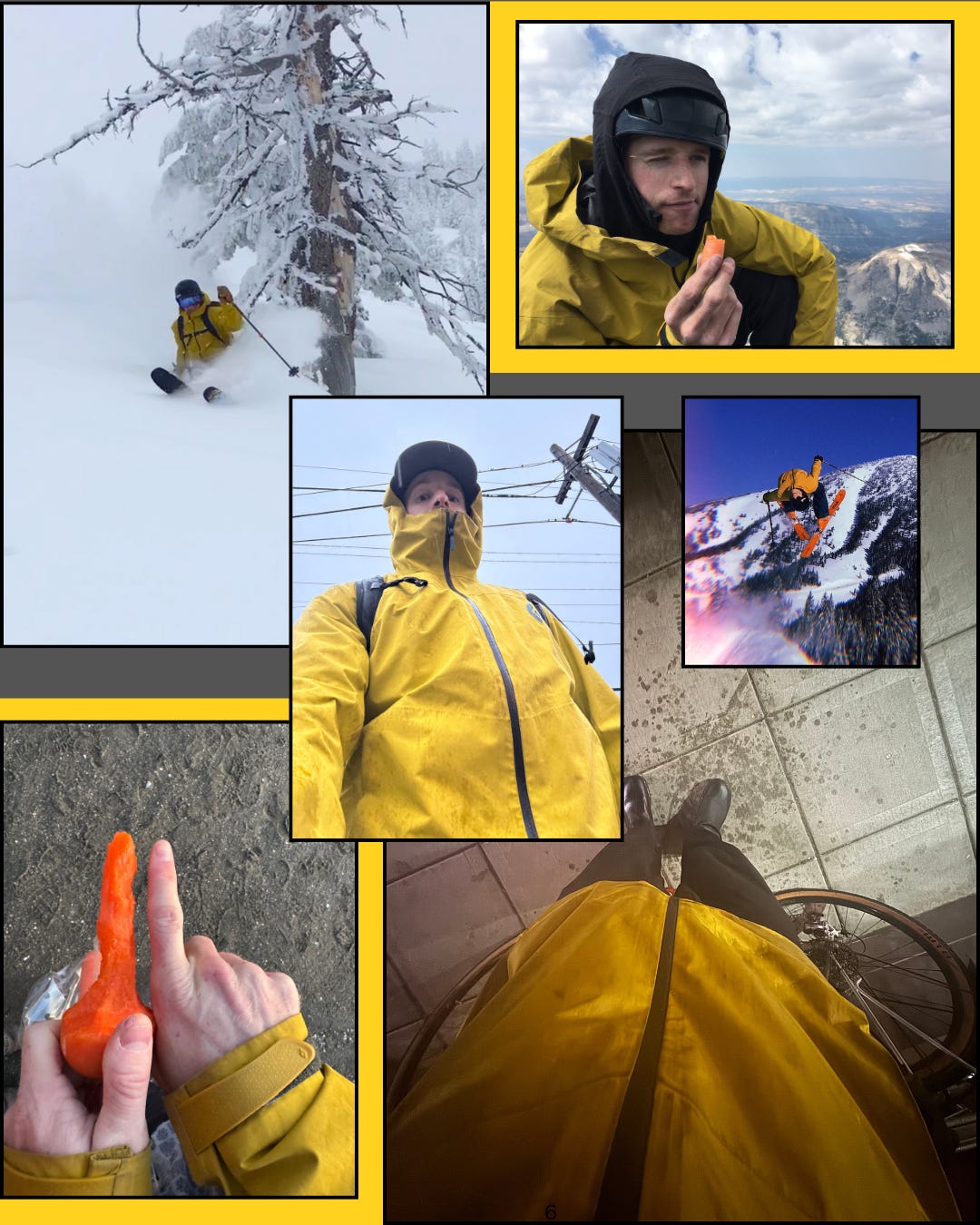
Unfortunately, after years of service, my yellow rain shell is haggard and dying. And in that state, it’s opened up a whole new set of questions about what a rain shell can and should be, and that is the topic of today’s letter.
What the shell?
Why is it that, when shopping for a rain shell, you usually have to choose between picking up a technical one from the hiking department or a very non-technical one (read: heavy, not packable, and not breathable) from a lifestyle brand?
That’s not necessarily a problem, but it does help explain why most technical shells fit and look the way that they do. Made for moving, they’re cut a bit long to keep your torso covered when you bend forward or lift your arms, and they’re cut a bit svelte to minimize bulk, reduce wind-flap, and to ensure that they don’t bunch up when you, say, don a harness or shoulder a backpack.
In my experience, this makes them practical for their intended purposes but unpleasant to wear under more everyday circumstances. Pull a rain jacket over a thick sweater or even a couple light layers and you quickly look and feel like a sausage (my least favorite feeling in clothing). They can be stuffy, claustrophobic, loud, and generally unpleasant to wear. If I’m not going to be out for long, I usually prefer to just get wet.
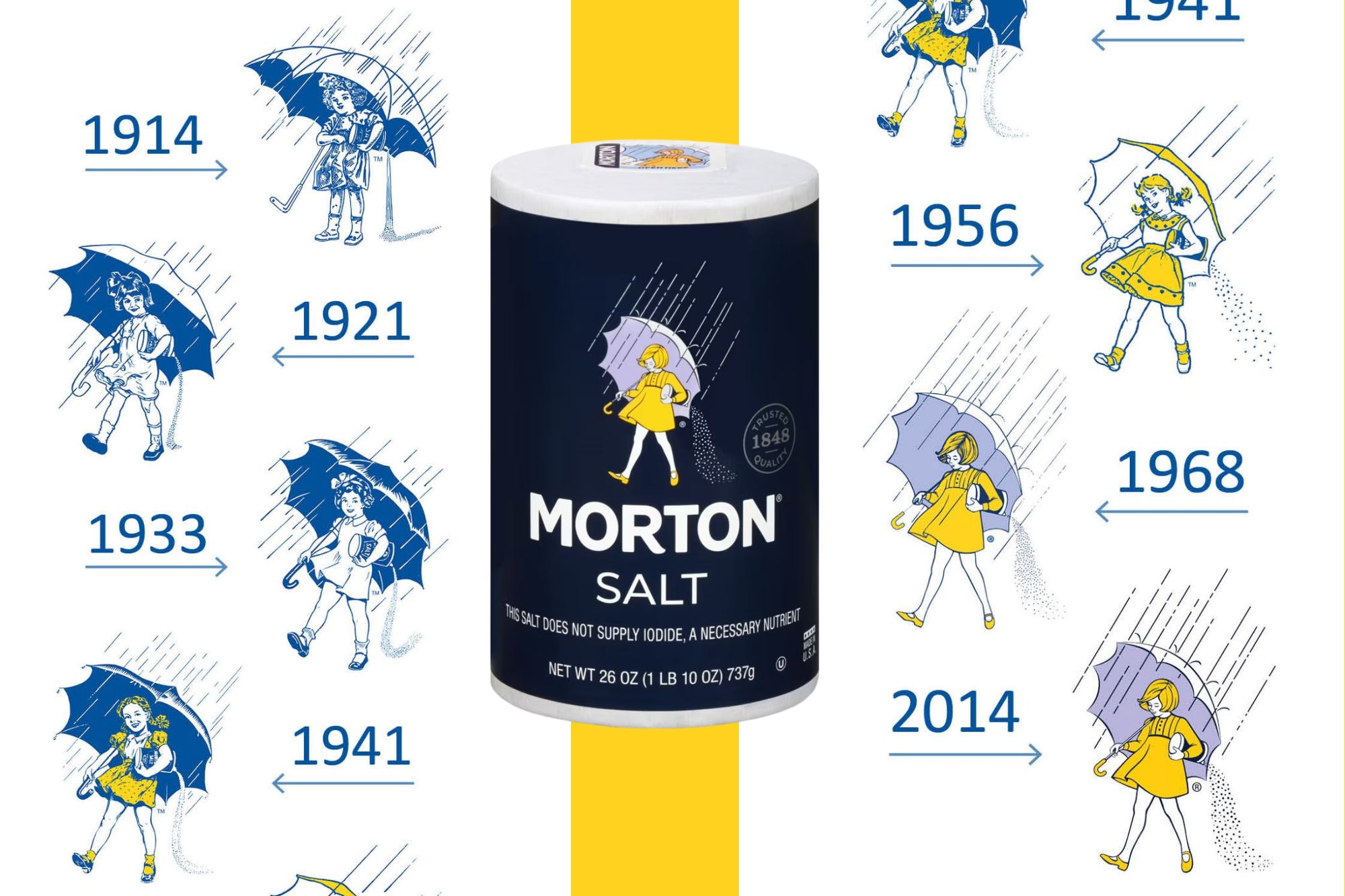
I recently asked a friend—a fellow Washingtonian, writer, and gear reviewer—what she sought in a rain jacket and she told me that she wanted to look and feel like the girl on the Morton’s Salt container, which is funny because that girl is not wearing a rain jacket at all: she’s wearing a yellow dress and carrying an umbrella!
But I see what my friend was getting at: that girl is romping, her dress is flowing, and she seems happy enough with how dry she is. No plastic-wrapped sausage is she.
How, then, can we feel good in the rain like the Morton Salt girl? Well, I have a few ideas. Below, I’ve gathered a number of jacket options that come from outside the regular ol’ hiking department.
A couple of quick notes: trench- and parka-style rain jackets have been omitted from this guide for the simple reason that I prefer coats I can easily wear on my bike. There are also many cool waxed cotton and ventile options out there, but waterproof natural fibers deserve a letter of their own!
Consider a Different Cut
We’ll start with a simple solution and get a bit wilder as we go.
Perhaps it shouldn’t come as a surprise, but leave it to brands from wet, grey places to experiment with the different ways a standard rain shell can fit.
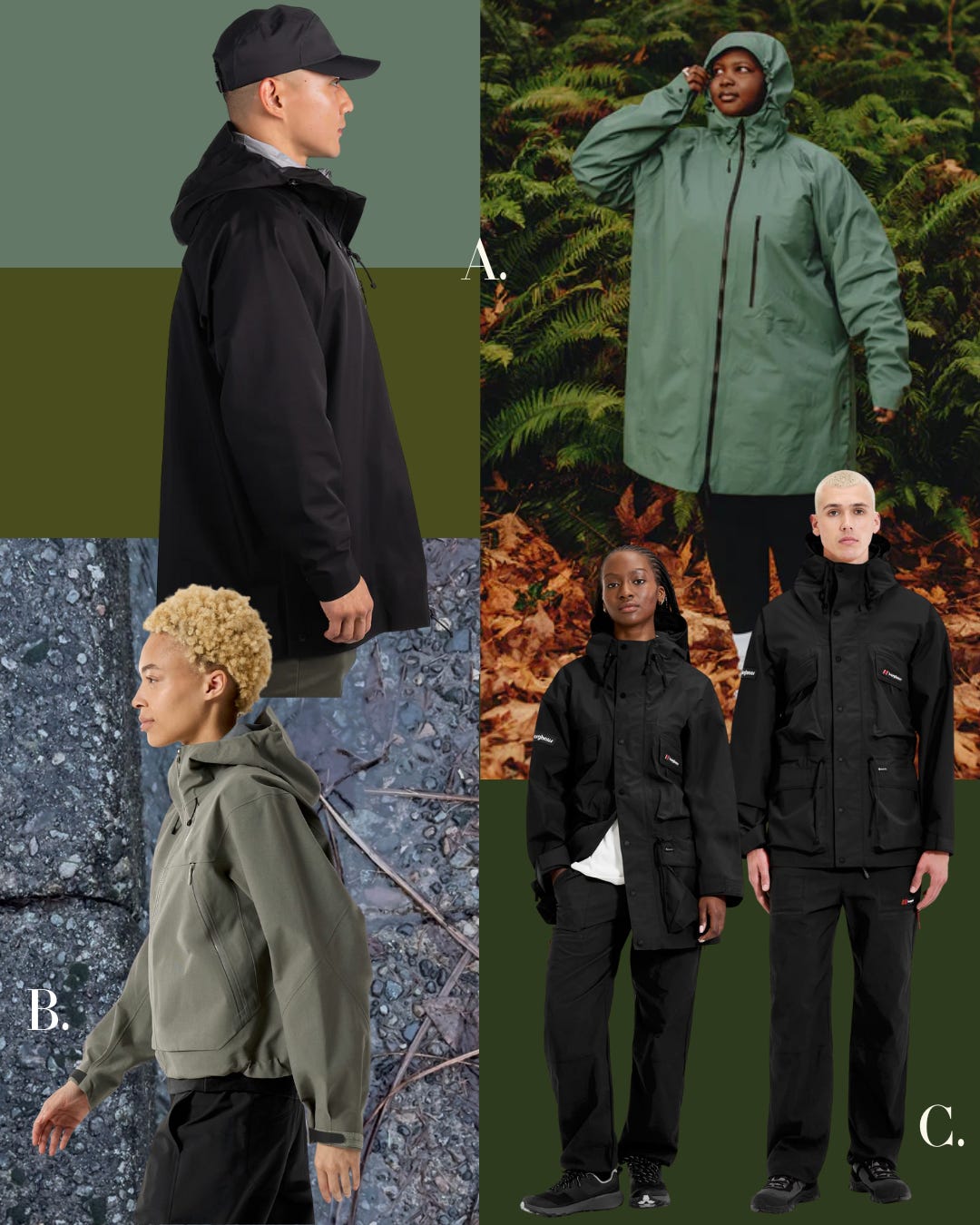
A. A Bellingham pal of mine swears by this one. The Legacy Poncho V3 Jacket comes from San Pancho, a small brand based on B.C.’s Vancouver Island. Simple and functional, it threads the needle between jacket and parka just right. The roomy, gender-neutral design plays well with a variety of layering choices and body types, and the combo two-way zipper plus buttoned side slits give you a bit of flexibility in styling it.
B. Hailing from the great grey city of North Vancouver, The Bird is well known for making quality hardshells—and they’ve recently been updating them with new silhouettes, particularly on the women’s side.
A few months ago, I spotted a pal who works there wearing the Altira Cropped Jacket and immediately got curious. The Altira has nice pleats along the back bottom hem that give it a rounded shape, somewhat akin to a classic jean jacket with the waistband tabs pulled in. This one wouldn’t do much to keep your legs dry, but neither would a standard hiking shell.
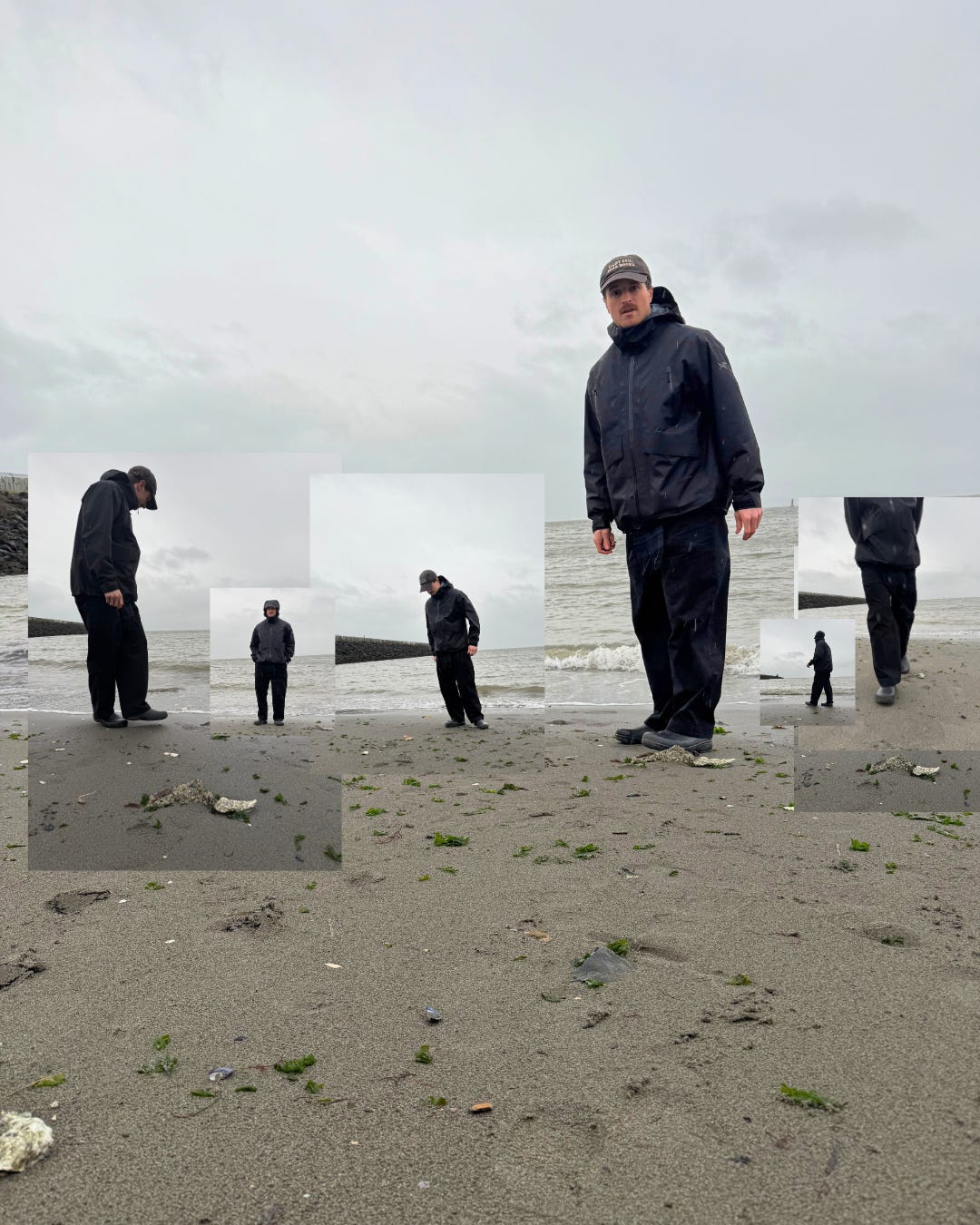
Below, I’m wearing another Arc’teryx option, the Emaris Relaxed Jacket in a women’s XL, and it pretty much addresses all my qualms with my old yellow shell: it’s roomy enough to wear a wool sweater underneath; it hangs well without bunching; it’s got great pockets (including side-entry ones that I can stuff my hands inside); plus a two-way zipper. For its price point, it definitely stretches the limits of the “buy once, buy right” philosophy, but I expect (and hope) it’ll hold up for a long time.
C. If most GORE-TEX jackets read granola, Berghaus’ Trango GORE-TEX Jacket offers a bit of British prep flavor. Originally designed for mountain expeditions in the 80s, the Trango had a pop culture moment in the 90s when Oasis frontman Liam Gallagher wore it on stage during a concert in Oslo. Berghaus re-released the jacket, which has a cinched waist and a buttoned placket that covers the zipper, with more modern specs earlier this year.
Don the Rain Cape
Why limit yourself to a standard zip-up jacket? Why not wear a waterproof cape?
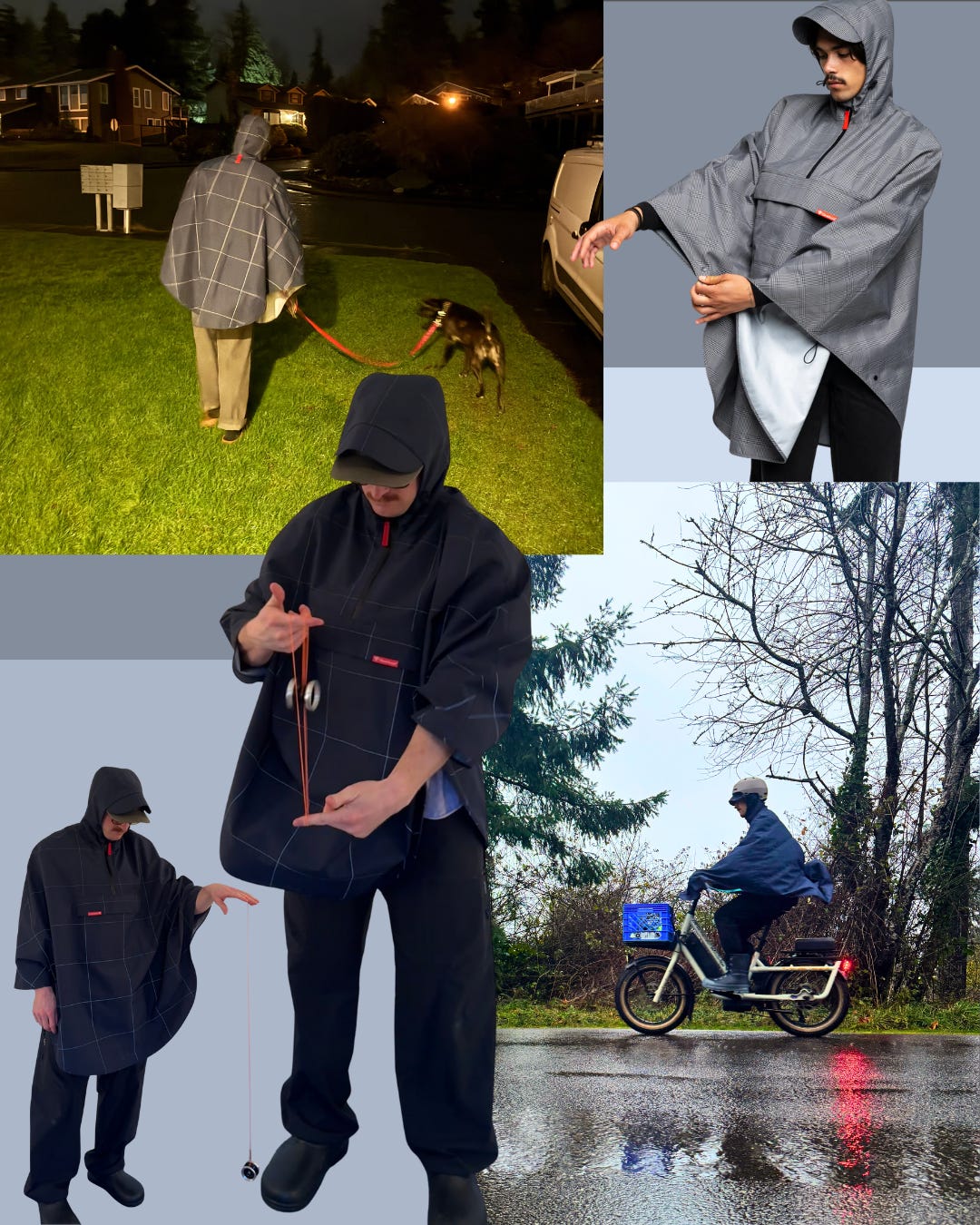
Whereas a rain jacket is stuffy and hard to layer, a rain cape is airy and can cover everything, including your bag or backpack. I’m a fan of the Rainger Rain Cape from Cleverhood, which has number of functional features that make in super practical, both on foot and on bike.
The Cleverhood has an adjustable hood, snaps that give the cape optional “sleeves”, a back cinch for reducing fabric flutter in stiff winds (or at high speeds), a big front pocket, and reflective threads that light it up at night. When I wear it, I feel a bit like I’m on a quest, à la Frodo or Little Red Riding Hood.
Perhaps most intriguingly, Cleverhood’s capes also have thumb loops that keep it taut over your handlebars, giving your legs some coverage while you pedal. (Note: I find this feature works best on bikes with a slightly forward-leaning riding posture, as the fabric can otherwise droop into a water-collecting depression.)
Forgive my rant, but I love how brands like Cleverhood design products not just for the world as it exists, but also for how it might exist. Cleverhood’s world is one where ~multimodal~ transportation reigns supreme and we can interact with our cities on the human level, regardless of weather. The brand donates over 10% of its earnings to street equity organizations that help make our streets safer and more welcoming, which is a cause I can get behind. Down with petroculture!
Ditch the Hood
Why does ‘most every rain jacket have a hood? Don’t some of us prefer damp hair to messy hair? And aren’t scalps waterproof?
Hoods are more optional than we tend to think, and ditching them opens up a whole new landscape of collars. I haven’t tried these jackets personally, but they all come with high waterproof ratings, classic silhouettes, and polished details that belie their technical chops.
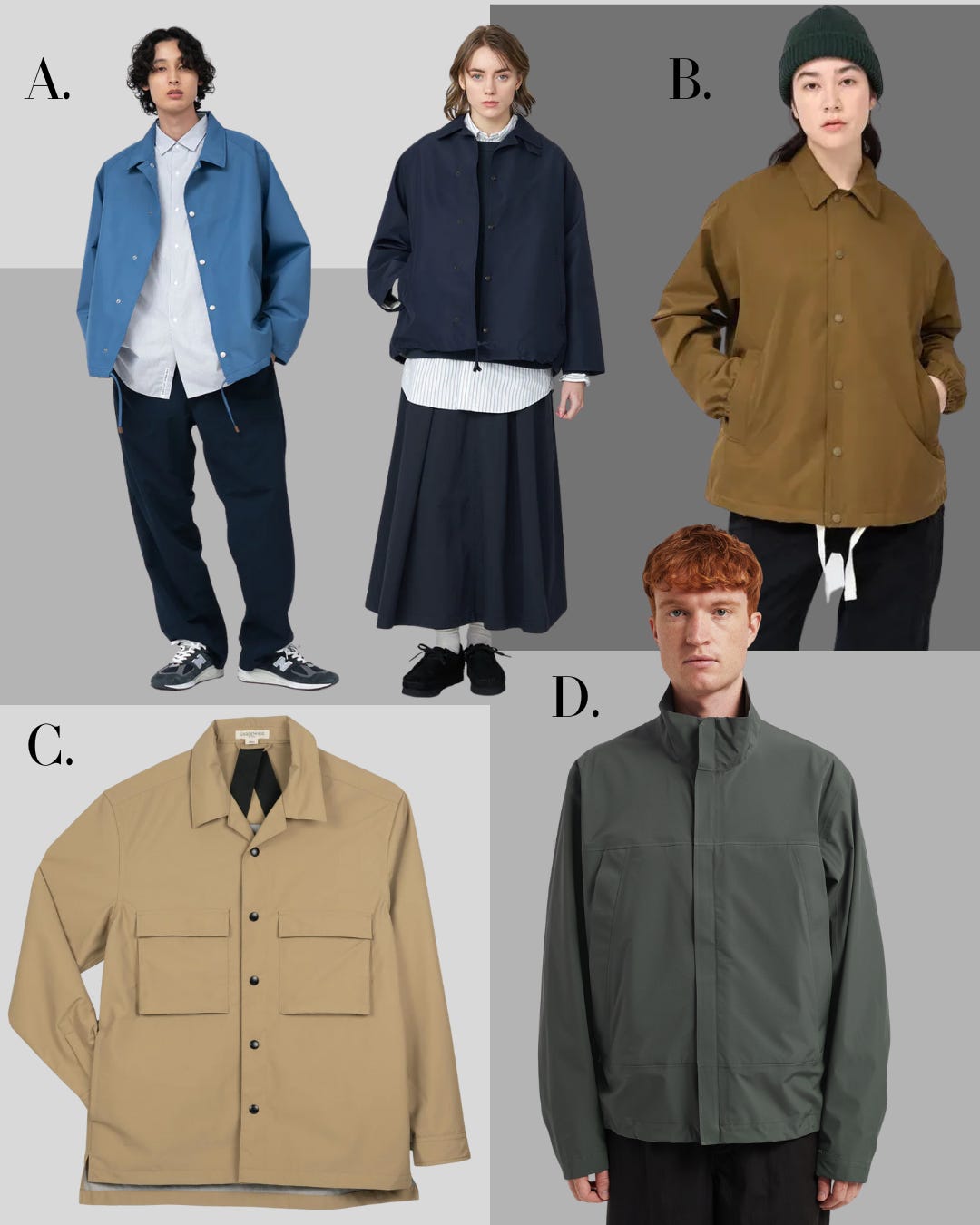
A. 2L GORE-TEX Coach Jacket from Nanamica (unisex)
B. 2L GORE-TEX Coach Jacket from Dune and Salt (unisex)
C. 3L Waterproof Work Jacket from Gardenheir (unisex)
D. 3L Waterproof Stand Collar Jacket from Norse Projects (men’s only)
Ditch the Long Sleeves
Leave it to the mountain bikers, the golfers, and the Swedes to cut off the forearms in the name of functionality. Sleeveless rain jackets breathe and move better compared to long sleeves, plus they give you a little more to play with in terms of silhouette and layering. Go short sleeve over long sleeve and—voila—gorp meets grunge 🤝.
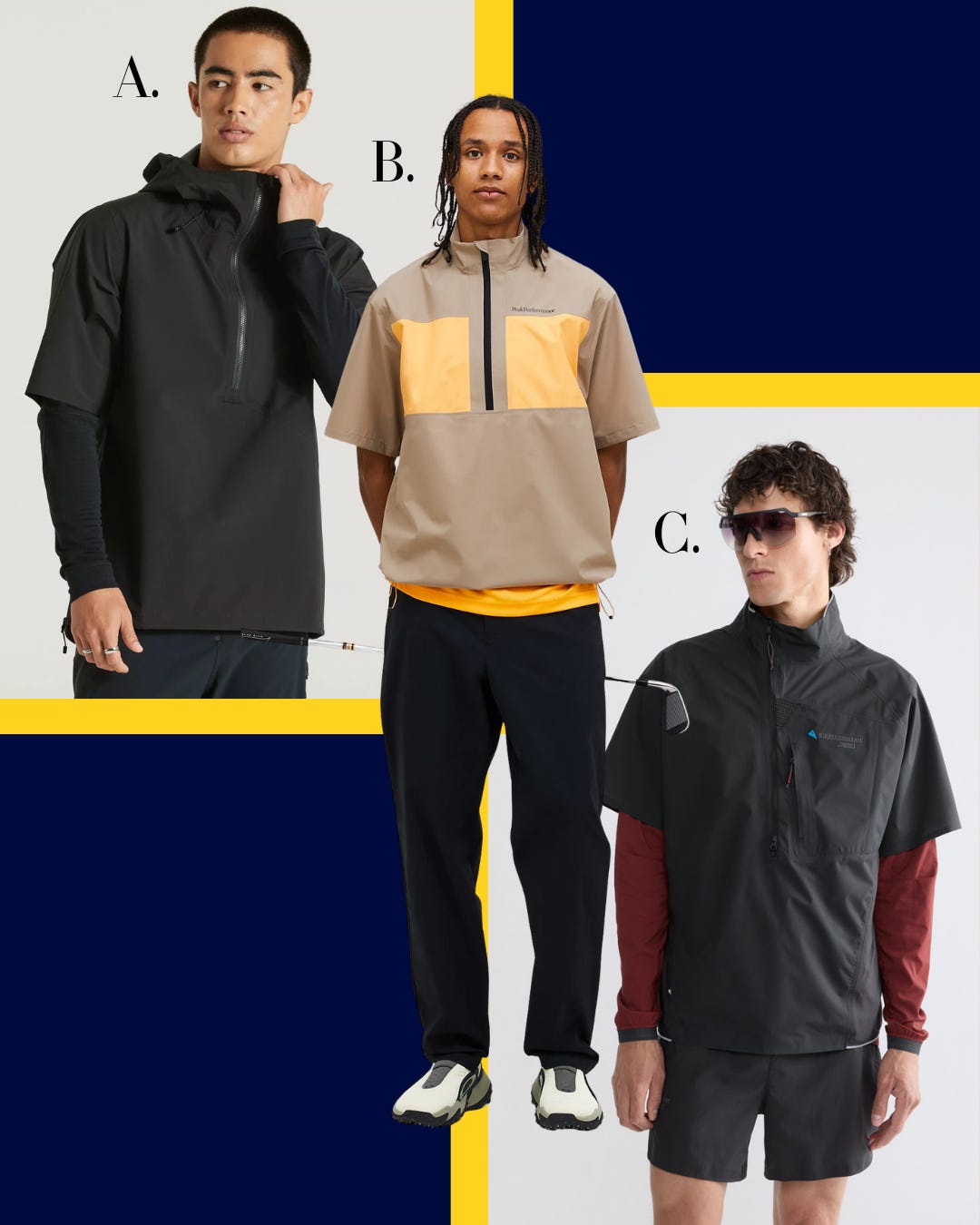
A. Trail Short Sleeve Rain Anorak from Specialized (The men’s version is on sale! But the women’s version is out of stock.)
B. 3L Shell Shortsleeve Anorak from Peak Performance (Men | Women)—I recommend taking the size-up-and-cinch approach on this one to detune any potential country club vibes.
C. Vidre Zip SS Jacket from Klättermusen (Men | Women)
Just Get Wet
In the end, it’s also often okay to simply skip the rain shell and get a little wet, especially if it’s just drizzling and you won’t be out long.
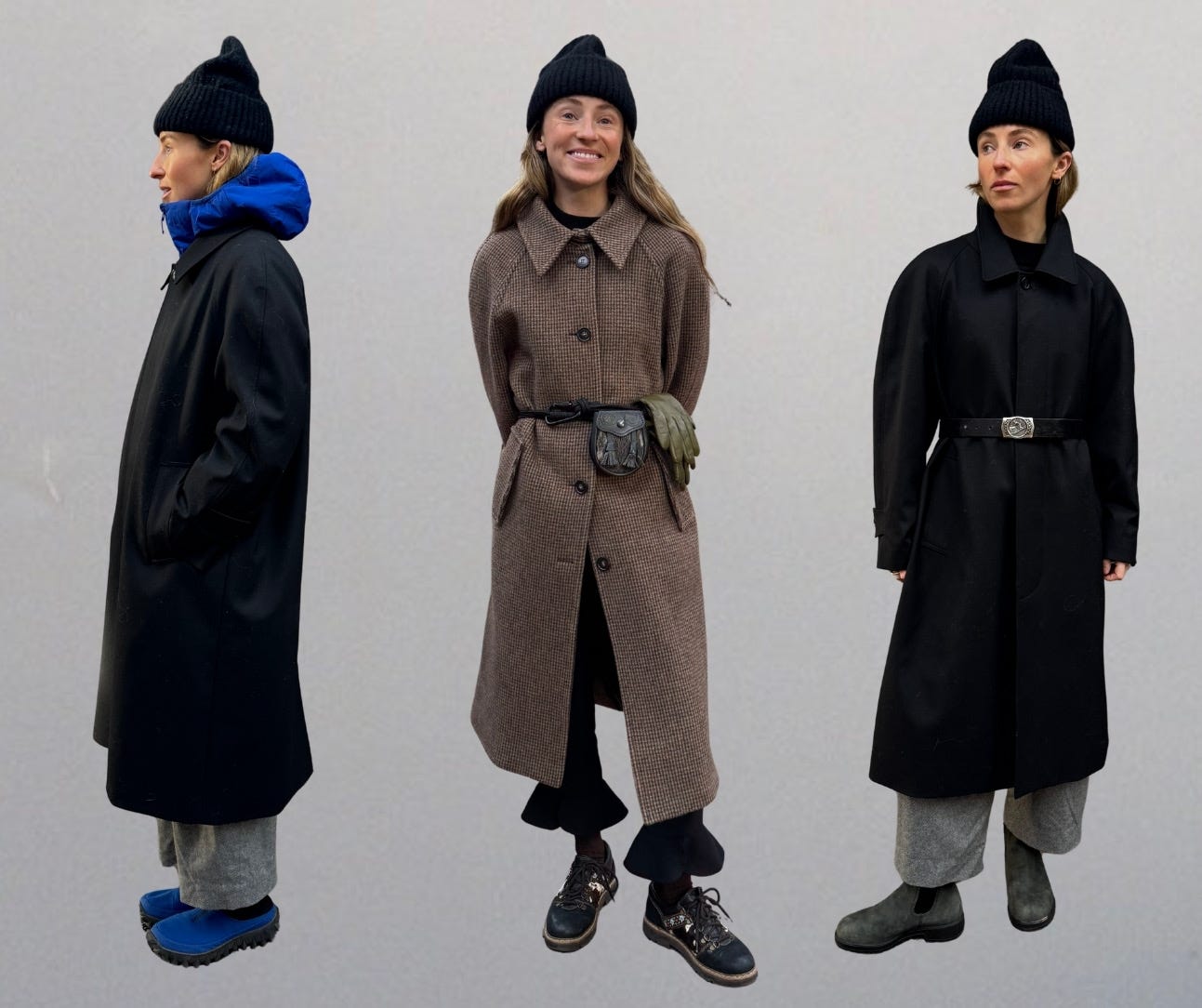
Wool jackets are perhaps the best substitute to make here, as their hydrophobic fibers help keep them from getting too saturated with moisture. Below, Kellyn wears her two wool “rain jackets.” The black one is from Dunst and the tan one is from Le; both, she says, are good enough for parched Colorado.
That’s all I’ve got! As springtime nears, we’ll ditch the plastic and get nerdy about waterproof natural fiber options. For now, though, June-uary has come for Bellingham and I’m thinking about sunshine.
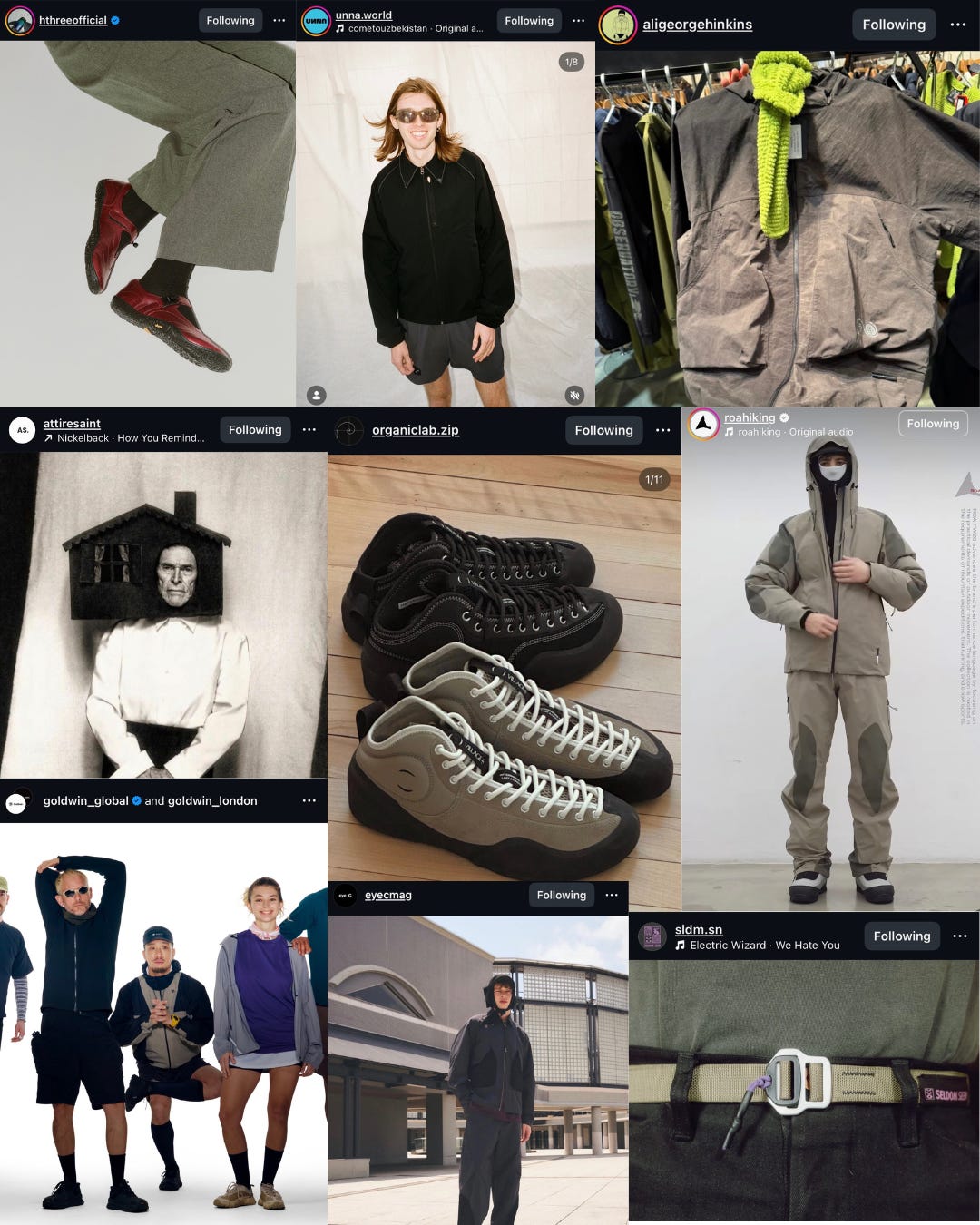
Oh! And one last thing: Thursday letters from Hadley, Kellyn, and I will now include a little compilation of screenshots that each of us has personally collected throughout the week. Think of it as a curated mini-scroll. We’ll go into the trenches online so you don’t have to :)
Blue skies,
☀️North ☀️
Off the Grid
The rain cape angle is kinda genius for bike commuting. Never thought about how a standard shell basically traps heat and looks terrible over layers. I had a similar experiance with my old Patagonia shell becoming that sausage feeling. The short sleeve rain jacket thing sounds wild but makes sense for layering.
These are all SO GOOD! I feel like it's so easy to get caught in a crunchy jacketed rut. Thanks for the inspo North!